Ethereum Staking Proposal EIP-8363 Faces Fierce Backlash

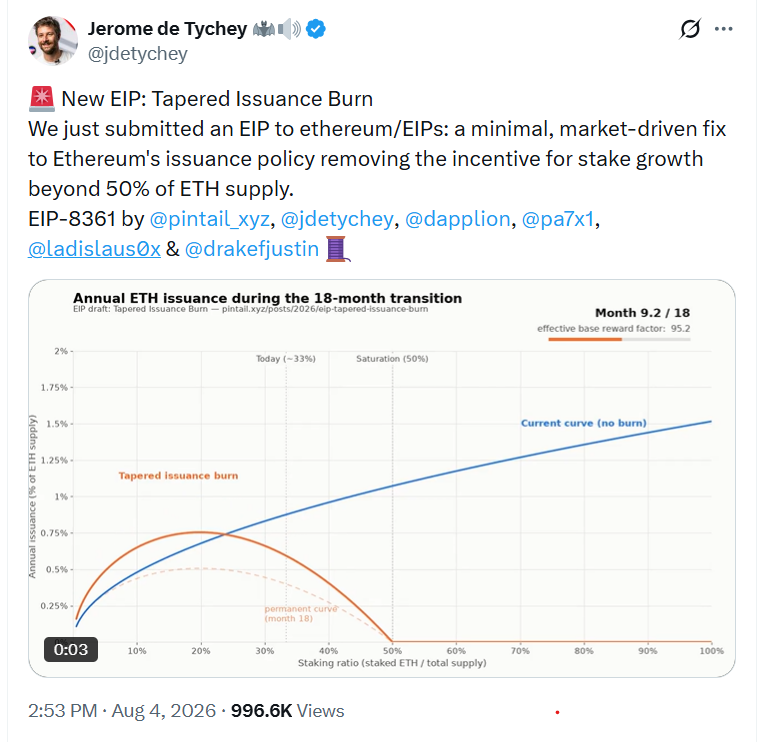
Ethereum Improvement Proposal EIP-8363, or "Tapered Issuance Burn," would gradually reduce staking rewards as more Ether is locked up to secure the network — eventually cutting new protocol issuance to zero once 50% of ETH's supply is staked. The proposal has sparked a fierce backlash from the Ethereum community, with some experts warning that it could weaken decentralization and undermine confidence in the network's monetary policy. The Ethereum community is strongly opposed to the proposal, with Mike Silagadze, founder of Ether.fi, stating that "It will obviously kill a huge chunk of DeFi which is built around the staking ecosystem." Dr. Steve Berryman notes that "We will come to a natural ceiling probably by the end of this year," suggesting that the current staking rewards may not be sustainable in the long term.
Live market snapshot (at publish): ETH $1,925.22 (+1.5% 24h)
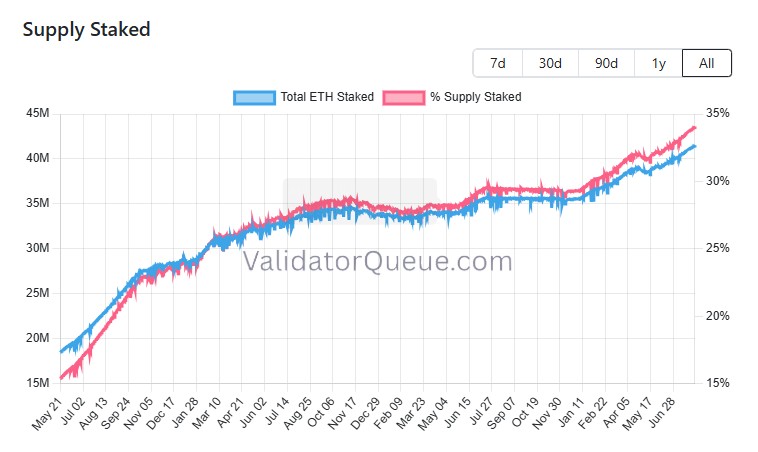
The proposed reduction in staking rewards could lead to a decline in participation, potentially disrupting Ethereum's lending markets and undermining confidence in the network's monetary policy. Approximately 34.07% of the network's supply is locked up, totaling 41.5 million ETH, representing a 15% increase in ETH staked since the start of the year. Dr. Steve Berryman highlights the importance of maintaining a balance between staking rewards and network security, noting that "People need a certain amount of liquidity."
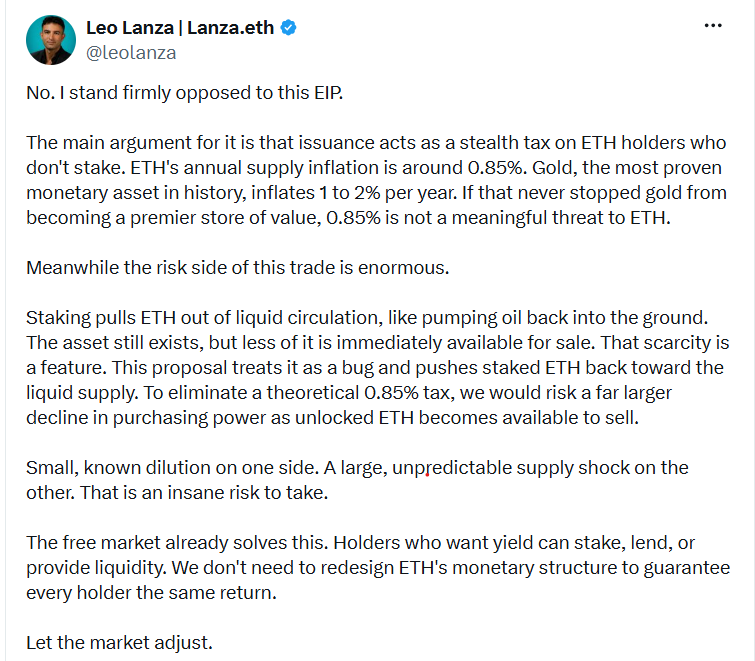
The potential consequences of EIP-8363 are far-reaching, with some experts warning that it could lead to a dramatic loss of confidence in the governance and stability of Ethereum. Mike Silagadze warns that "Any nation state or large institution looking at this will justifiably have a dramatic loss of confidence in the governance and stability of Ethereum." This could have significant implications for the network's adoption and development, particularly among institutional investors, as Dr. Steve Berryman notes that "Institutional investors will price accordingly."
41.5 million ETH is currently staked, representing approximately 34.07% of the network's supply. 15% increase in ETH staked since the start of the year. 2.67% current staking rewards percentage. 50% of ETH's supply needs to be staked before new protocol issuance is cut to zero.
Analysis: If EIP-8363 is implemented, it could lead to a decline in Ethereum's price, as the reduction in staking rewards could reduce participation and undermine confidence in the network's monetary policy. In contrast, rejecting the proposal could lead to a price increase, as the current staking rewards would remain in place, maintaining the network's security and attractiveness to investors.
The Ethereum community will be closely watching the developments surrounding EIP-8363, as the proposal has significant implications for the network's decentralization, monetary policy, and adoption. As the situation unfolds, investors and users will be looking for clarity on the potential consequences of the proposal and the Ethereum network's ability to maintain its security and attractiveness in the face of changing market conditions.
Frequently Asked Questions
- What is Ethereum Improvement Proposal EIP-8363?
- EIP-8363, or “Tapered Issuance Burn,” aims to gradually reduce staking rewards as more Ether is locked up to secure the network.
- How much of Ethereum's supply is currently staked?
- Approximately 34.07% of Ethereum's supply is staked, with 41.5 million ETH locked up.
- What are the potential consequences of EIP-8363?
- The proposal could weaken decentralization, disrupt Ethereum's lending markets, and undermine confidence in the network's monetary policy.