BIS Researchers Find Stablecoins Enable "Digital Dollarization"

Live market snapshot (at publish): USDC $0.9998 (-0.0% 24h) · USDT $0.9994 (+0.0% 24h) · BTC $66,485 (+1.7% 24h)
RugShield security check — USD Coin (USDC): Contract grade AAA · Speculative risk LOW · full on-chain scan
Dollar-backed stablecoins are facilitating a new form of "digital dollarization" that appears largely unaffected by capital controls, particularly in emerging markets, according to researchers at the Bank for International Settlements (BIS). This phenomenon allows households and businesses to shift into dollars outside the traditional banking system, potentially weakening monetary sovereignty. The BIS study analyzed 130 economies and found a significant rise in stablecoin adoption.
Stablecoin market capitalization currently stands at $309.7 billion, up from $260 billion previously, with payment volume increasing by 81% in a short period.
$309.7 billion stablecoin market capitalization 81% increase in stablecoin payment volume This growth is largely driven by the increasing use of stablecoins such as USDC and USDT.
Stablecoins can bypass capital controls more easily than bank deposits, allowing for the free flow of capital across borders, particularly in emerging markets where access to foreign exchange is limited and currency depreciation is a concern.
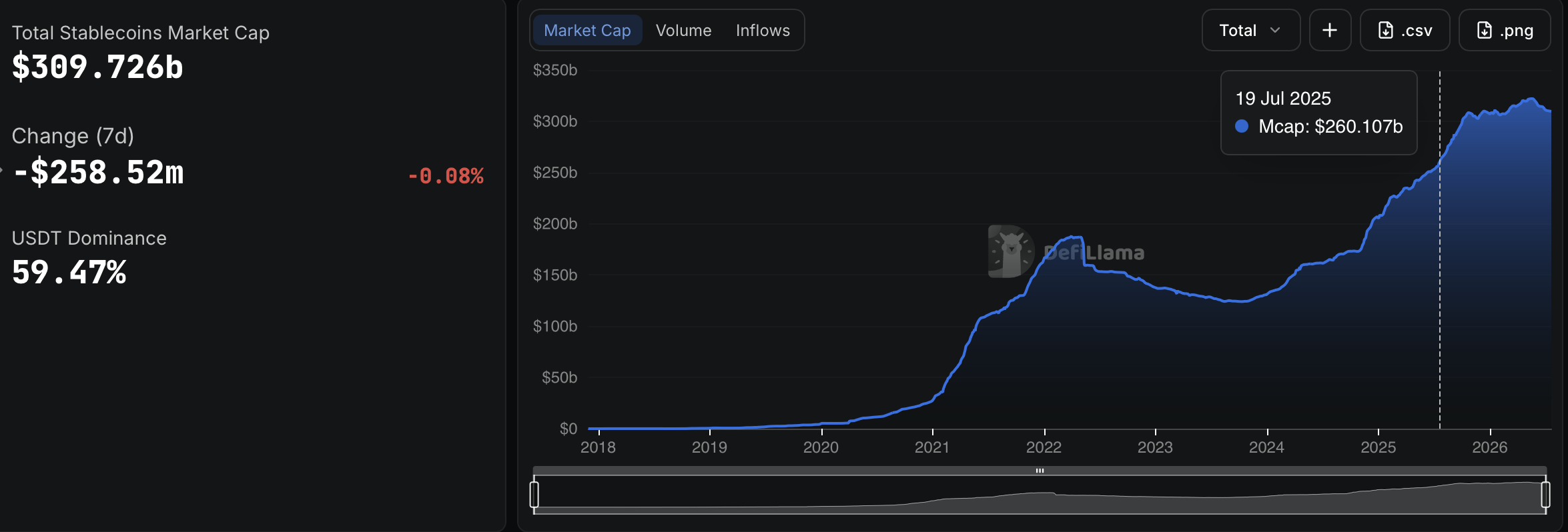 The use of stablecoins can provide a hedge against these risks, but it also raises concerns about the potential erosion of monetary sovereignty.
The study's findings have significant implications for monetary policy and financial regulation. The International Monetary Fund (IMF) has warned that the increasing use of stablecoins could lead to a loss of monetary sovereignty and undermine the effectiveness of capital controls. Analysis: If the trend of digital dollarization continues, it could lead to a significant shift in the global financial system, becoming a major challenge for monetary policymakers, particularly in emerging markets.
The BIS study highlights the need for further research and monitoring of the stablecoin market. As the market continues to evolve, investors and policymakers will be watching the stablecoin market closely, particularly in emerging markets, where the use of stablecoins is becoming increasingly prevalent.
Frequently Asked Questions
- What is digital dollarization?
- Digital dollarization refers to the process of households and businesses shifting into dollars, often through stablecoins, outside the traditional banking system.
- How do stablecoins bypass capital controls?
- Stablecoins can bypass capital controls more easily than bank deposits, allowing for the free flow of capital across borders.
- What is the current stablecoin market capitalization?
- The current stablecoin market capitalization is $309.7 billion, up from $260 billion previously.